
A Montessori nursery is an early years setting based on the child-led educational principles Maria Montessori developed over a century ago. Rather than following a fixed timetable of adult-led activities, children in a Montessori nursery choose their own tasks within a carefully prepared environment, work at their own pace, and build independence from their first days at our private Kensington school.
For parents comparing early years and nursery options, understanding what a Montessori nursery actually offers, and how it differs from a more traditional setting, is often the first real decision in choosing the right start for a child. This page explains where the method came from, what it looks like in practice, and how Montessori thinking continues to shape everyday life at Bassett House Nursery.
The Montessori Method: A Brief History
The method takes its name from Maria Montessori, an Italian physician born in 1870 and the first woman to earn a medical degree from the University of Rome. Her early work with children with learning difficulties led her away from lecturing and toward observation: she watched closely how children learned when given freedom, order, and the right materials, and used what she saw to build an entirely new approach to education.
By 1907, Montessori had opened her first Casa dei Bambini, or Children’s House, in Rome. The method she developed there, grounded in respect for the child, hands-on learning and a carefully prepared environment, has since spread to thousands of nurseries and schools worldwide, including many across the UK.
Core Principles of a Montessori Nursery
A genuine Montessori nursery is built around a small number of consistent principles:
- Child-Led Learning: Children choose their own activities within a carefully prepared environment, working at their own pace rather than following a fixed timetable.
- Hands-On, Practical Play: Purpose-designed Montessori materials let children learn abstract concepts through touch and repetition.
- Mixed-Age Groupings: Many Montessori settings group children across a small age range, encouraging younger children to learn from older peers.
- The Prepared Environment: Classrooms are set up so children can independently choose, use and put away their own activities.
- Respect for the Individual Child: Every child is treated as a capable, active participant in their own learning and development.
How Is a Montessori Nursery Different from a Traditional Nursery?
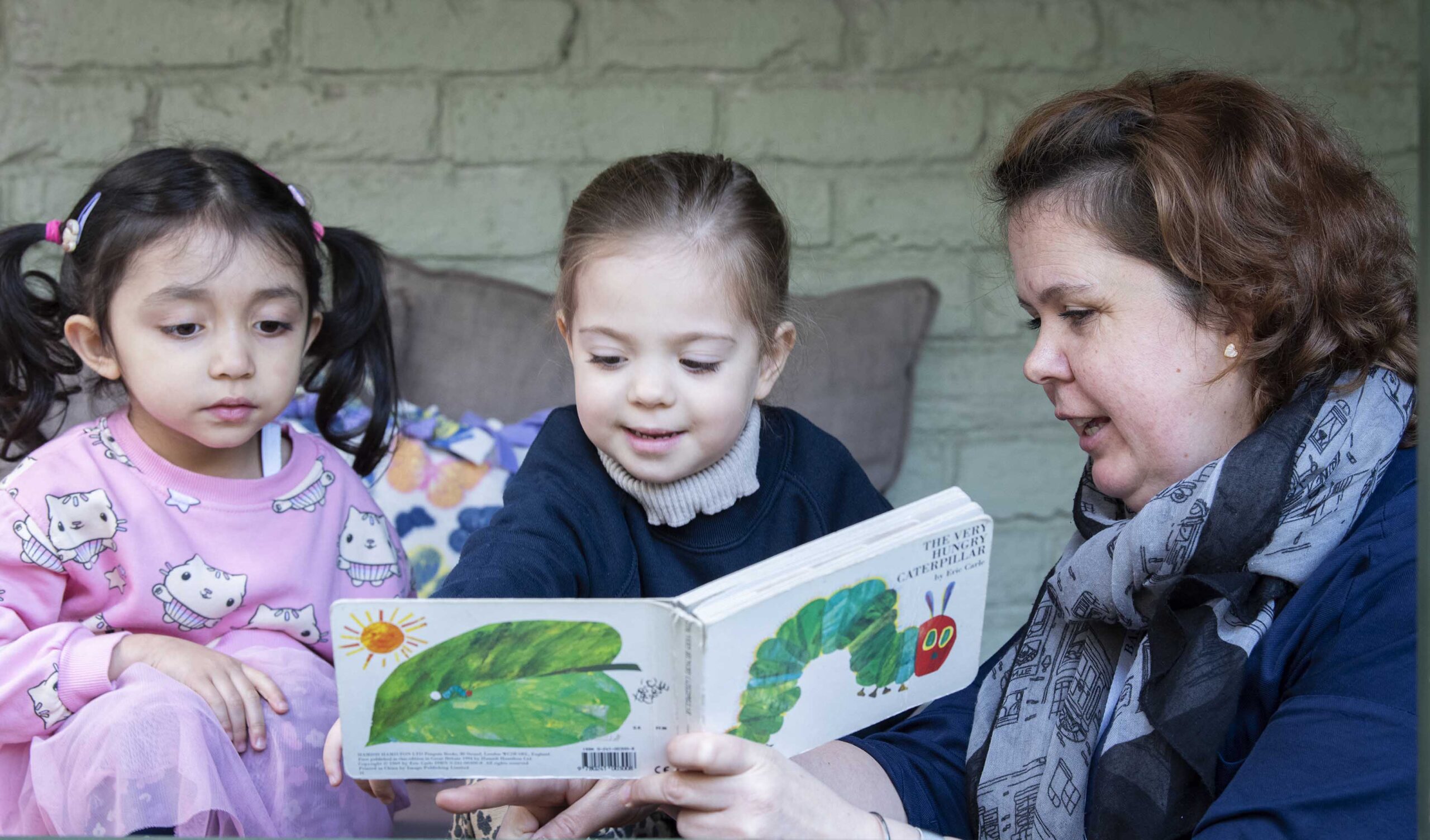
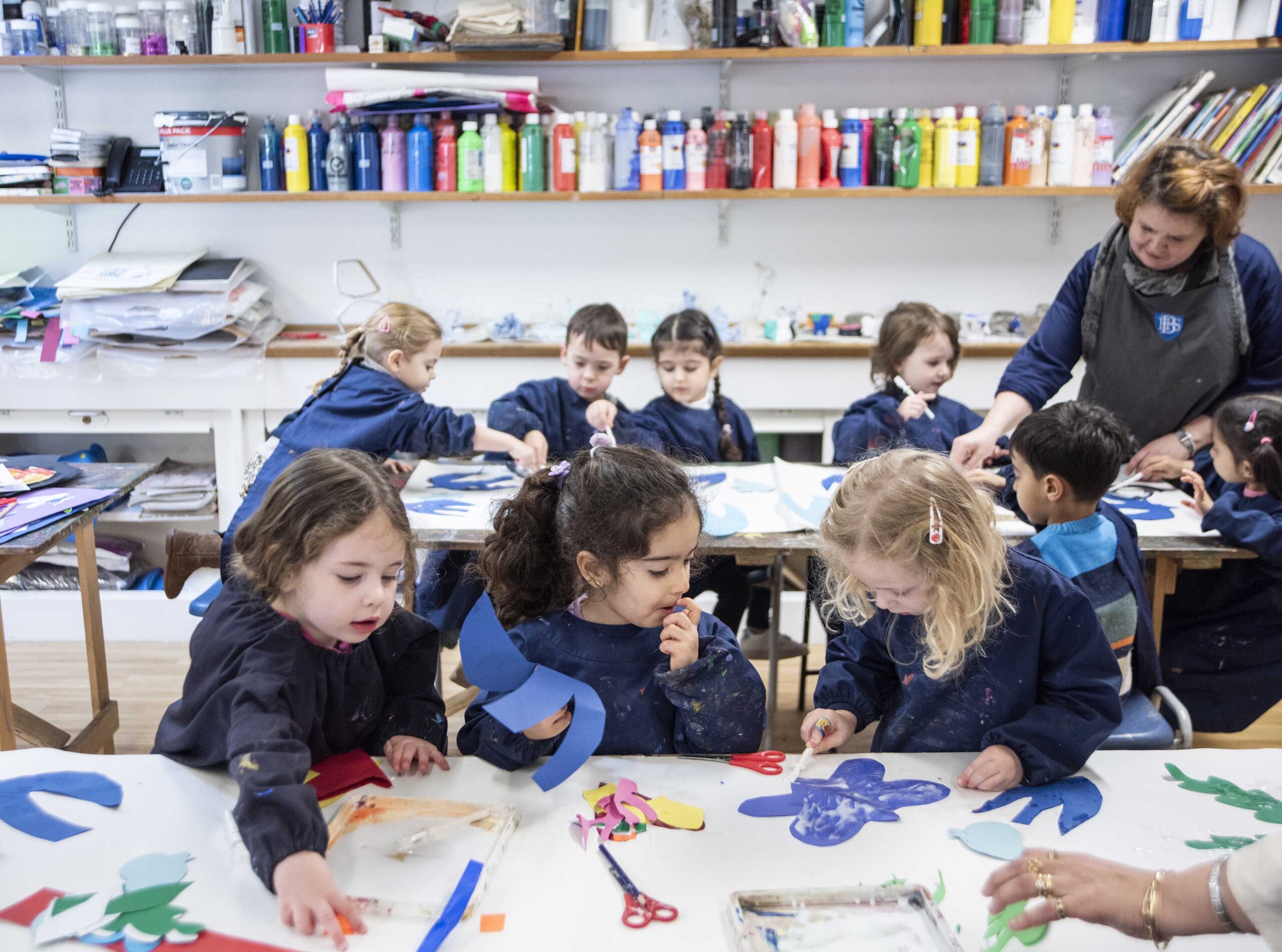
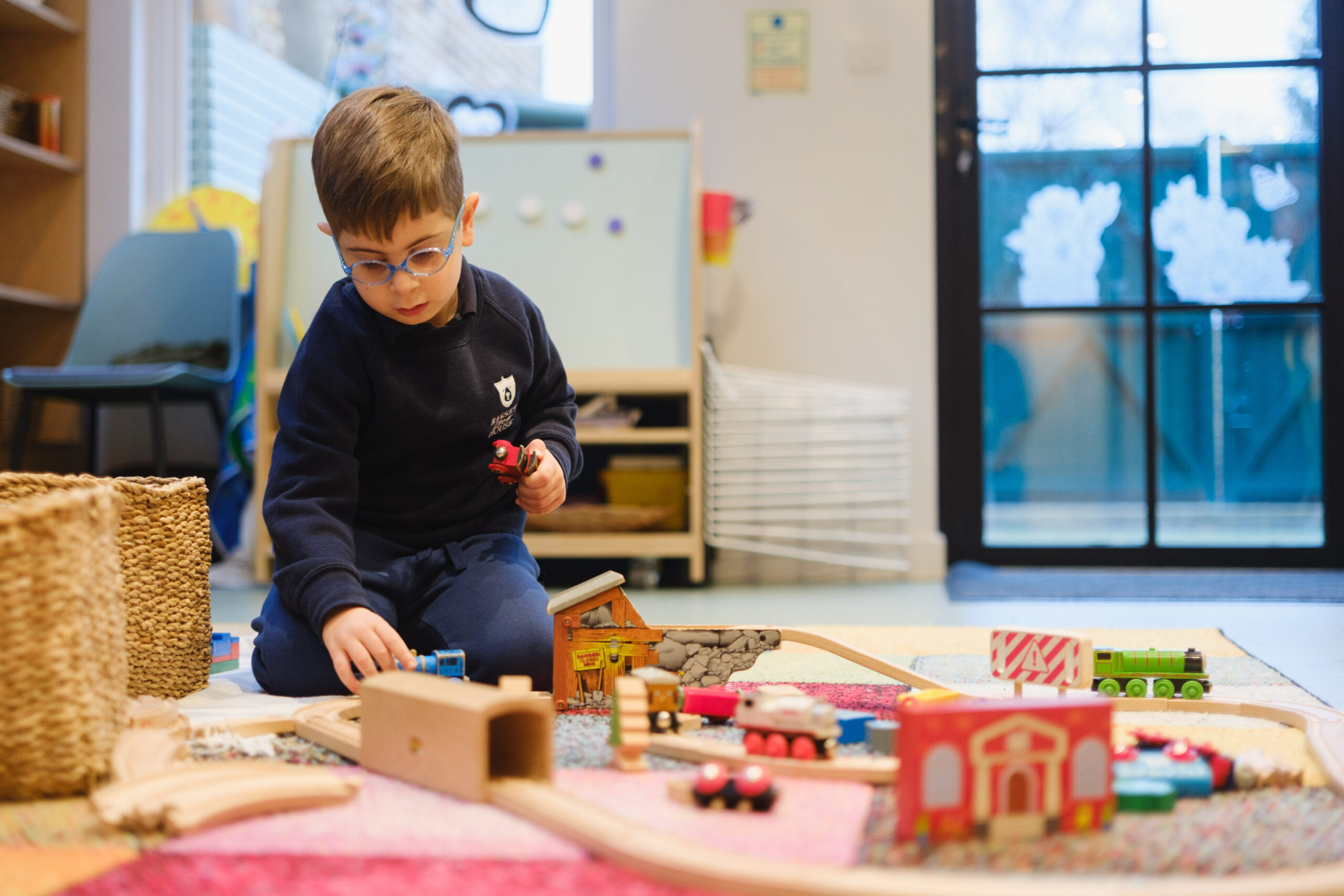
Traditional nurseries tend to be more adult-led, with a set timetable of group activities that every child follows at the same time. A Montessori nursery works differently: children are given long, uninterrupted blocks of time to choose their own activities, and staff act more as guides than instructors, stepping in to support rather than direct.
Neither approach is superior; the two simply suit children in different ways. Some children thrive with the structure and predictability of a traditional timetable, while others flourish when given more ownership over how their day unfolds.
Benefits of a Montessori Nursery for Young Children
Because children are trusted to make real choices from an early age, a Montessori nursery tends to build confidence quickly: children learn that their decisions matter and that they can complete tasks independently. This, in turn, supports curiosity, since children can follow their own interests rather than a single fixed curriculum.
The habits formed in a good Montessori setting– concentration, self-motivation and a genuine enjoyment of learning– tend to serve children well long after they leave the nursery, forming a foundation that many parents see carried through into primary school and beyond.
Montessori at Bassett House Nursery
Bassett House Nursery blends core Montessori principles with a carefully curated early years curriculum for children aged 2 to 4, combining child-led choice with the guidance, structure and specialist teaching of an established Notting Hill prep school. For full details on how we deliver the method day-to-day, visit our Montessori Approach page.
Frequently Asked Questions
What age is Montessori education suitable for?
The Montessori method is designed around the birth-to-six developmental window, when children are considered to have the greatest natural capacity to learn. At nursery age, this typically means Montessori-informed settings that welcome children from around age 2 through to the start of primary school.
Maria Montessori was an Italian physician, born in 1870, who developed her method by directly observing children in the early twentieth century. She was the first woman in Italy to qualify as a medical doctor and went on to become one of the most influential figures in early-years education worldwide.
Is Montessori education right for every child?
Not necessarily, and that is perfectly normal. Many children thrive with the freedom of child-led learning, while others prefer, and do equally well with, more structured guidance. Either approach can support a happy, successful start to school; the right fit depends on the individual child.
What is the difference between Montessori and EYFS?
The Early Years Foundation Stage (EYFS) is the statutory framework that all early years settings in England must follow. Montessori is a teaching philosophy, not a replacement for it: a Montessori nursery still meets every EYFS requirement, simply delivered through a Montessori-informed approach.
Do Montessori nurseries follow the same curriculum as other nurseries?
Yes. UK Montessori nurseries must still meet EYFS learning and development requirements. What differs is how they deliver that curriculum: through Montessori materials, mixed-age groupings, and long periods of independent, child-led activity.
What should I look for when choosing a Montessori nursery?
Look beyond the name. Ask about staff training and whether teachers hold a recognised Montessori qualification, how much of the classroom day is genuinely child-led, and whether the environment is set up to let children choose and put away their own activities independently.
Can children move between Montessori and traditional schooling later on?
Yes. Children who begin in a Montessori nursery move on to a wide range of primary and prep schools, Montessori or otherwise, and adapt well. The independence, concentration and love of learning fostered in the early years tend to transfer easily to more structured settings.
Does Bassett House Nursery follow the Montessori method?
Yes. Bassett House Nursery blends Montessori principles with a structured early years curriculum for children aged 2 to 4. Visit our Montessori Approach page to see how the method shapes everyday life at the school.
Visit Us / Contact Us
If you would like to see Montessori principles in practice, we would love to welcome you to Bassett House. Explore Our Nursery or Book a Stay and Play session to meet the team and see the environment for yourself.